

Short-wave infrared (SWIR) imaging is no longer limited to laboratories. Today, it powers semiconductor wafer inspection, fruit sorting, laser beam profiling, and security surveillance. But when you plan to deploy SWIR technology, one critical question arises early in the project: should you choose an off-the-shelf model or invest in a tailored solution? Understanding the differences between a Standard SWIR Camera and a Custom SWIR Device will help you control costs, shorten integration time, and guarantee performance.

For the majority of industrial applications, a standard model is more than sufficient. Manufacturers offer proven sensors — typically InGaAs arrays covering 0.9–1.7 µm — in familiar resolutions such as VGA or 1.3 megapixel, with GigE, USB3, or Camera Link interfaces. Because these units are produced in volume, they offer lower prices, immediate availability, and extensive documentation. If your application involves common tasks like packaging inspection, moisture detection, or basic through-silicon imaging, a standard camera lets you complete Industrial Vision Equipment integration within days rather than months. Standard products also benefit from mature software ecosystems and third-party vision library support.
Certain applications break the mold of standard specifications. You may require an extended spectral response up to 2.5 µm, a mechanically compact module without a housing, a specialized window material, or firmware modified for unique triggering sequences. In these cases, a Custom SWIR Device becomes the smarter investment. Customization can include sensor selection, optical filter integration, thermal management, and even embedded processing boards. Although development cycles are longer and unit costs higher at low volumes, a custom solution eliminates compromises — delivering exactly the performance your application demands. Companies like GHOPTO specialize in turning such requirements into production-ready hardware.
There is also a hybrid route. If you build your own OEM Camera products — such as handheld analyzers, medical devices, or drone payloads — you can source OEM camera boards or modules from an established manufacturer. This approach gives you the core imaging technology while leaving mechanical design, branding, and user interface entirely in your hands. OEM programs typically offer flexible volume pricing, long-term supply agreements, and co-engineering support, making them ideal for product companies entering the infrared market quickly.
Before deciding, evaluate four dimensions:
Volume: Low-volume or prototype work favors standard cameras; high-volume or differentiated products justify custom or OEM routes.
Lead time: Standard units ship in days; custom developments may take 3–6 months.
Environment: Extreme temperatures, vibration, or space constraints often demand custom mechanical design.
Budget: Factor in total cost of ownership — custom devices may reduce system complexity elsewhere and lower overall cost.
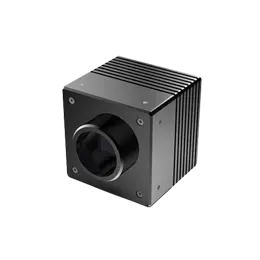
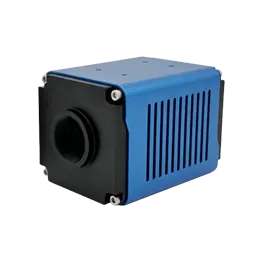
An OEM SWIR camera module deployed within Industrial Vision Equipment

Neither option is universally better. A Standard SWIR Camera delivers speed, reliability, and economy for mainstream applications, while a Custom Infrared Camera provides the precision and differentiation that demanding projects require. Many organizations start with a standard unit for proof of concept, then transition to an OEM or custom design for production. Whichever path you choose, partner with an experienced supplier that offers both product lines and engineering expertise.

 English
 中文