

What machines can see determines what industries can achieve. However, the information available to most vision systems is still limited by the boundaries of visible light. When two materials appear identical to the human eye but behave differently under infrared wavelengths, conventional imaging may overlook the very details that determine quality, efficiency, and accuracy.
This gap between visible appearance and hidden optical information is driving the adoption of SWIR imaging technologies in advanced machine vision. By extending detection beyond the visible spectrum, a swir ingaas sensor enables imaging systems to uncover subtle differences in materials, surfaces, and processes that traditional cameras cannot recognize.
At the center of this capability is the InGaAs-based swir detector sensor, which provides high sensitivity in the short-wave infrared range and transforms invisible spectral signals into valuable imaging data. From industrial inspection to automated quality control, SWIR InGaAs technology is redefining how machines perceive and analyze the world around them.
Visible light cameras have become a fundamental component of industrial automation because they are effective for many conventional inspection tasks. They can identify colors, shapes, surface defects, and visible patterns with high efficiency. However, their performance is restricted by the limited wavelength range that they can detect.
Many industrial challenges cannot be solved through appearance-based inspection alone. Materials that look identical under visible illumination may have completely different spectral responses in the infrared range. This limitation becomes especially important when manufacturers need to analyze composition, moisture content, internal differences, or subtle quality variations.
For example, food processing, pharmaceutical production, semiconductor manufacturing, and material sorting often require information that cannot be obtained from visible images. A camera may capture the surface appearance of an object, but it may not reveal differences hidden beneath that surface.
A swir detector sensor addresses these limitations by detecting short-wave infrared signals beyond the visible spectrum. By collecting additional spectral information, SWIR imaging systems provide a more complete understanding of materials and processes, enabling more accurate machine vision decisions.
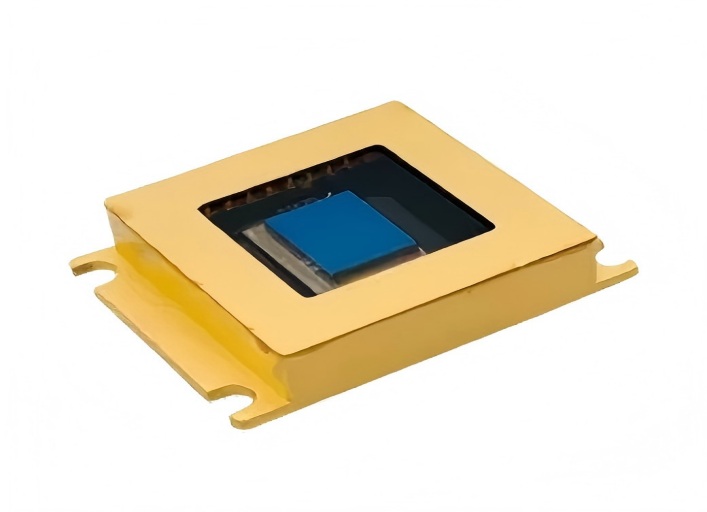
Human vision can only perceive a narrow range of electromagnetic wavelengths, while SWIR imaging operates in a region where many materials show unique optical characteristics. A swir ingaas sensor uses indium gallium arsenide (InGaAs) technology to detect short-wave infrared signals and convert them into high-value image information.
Unlike visible cameras that primarily rely on differences in brightness and color, SWIR InGaAs sensors analyze how materials interact with infrared wavelengths. This allows machine vision systems to identify variations that remain invisible under normal lighting conditions.
This capability creates new opportunities for advanced inspection applications. Materials with similar visible appearances can often be distinguished through their SWIR responses, while changes in moisture, chemical composition, or structural characteristics can become easier to identify.
The swir detector sensor plays an important role in these applications by providing the detection performance required to capture weak infrared signals. When integrated into industrial imaging systems, it helps transform invisible information into actionable inspection data.
| Comparison Factor | Visible Imaging System | SWIR InGaAs Sensor System |
|---|---|---|
| Spectral Range | Limited to visible wavelengths | Extends detection into the short-wave infrared range |
| Information Captured | Mainly surface appearance and visible features | Material-related spectral characteristics beyond visible perception |
| Material Identification | Limited when materials look visually similar | Improved differentiation through infrared response analysis |
| Industrial Applications | General visual inspection tasks | Advanced inspection, sorting, and quality analysis applications |
The performance of a SWIR imaging system depends largely on the capabilities of its detector technology. InGaAs has become one of the most widely used materials for SWIR detection because it offers strong sensitivity in the short-wave infrared range and supports high-performance imaging applications.
A swir ingaas sensor provides several advantages for advanced machine vision systems. Its spectral response allows cameras to capture information outside the visible range, giving engineers access to additional details for inspection and analysis.
Compared with conventional imaging technologies, InGaAs-based SWIR sensors are particularly valuable when applications require reliable detection under challenging conditions. They can help identify differences in materials, improve classification accuracy, and provide additional information for automated decision-making.
A high-performance swir detector sensor also supports integration with modern optical systems. By combining sensors with suitable lenses, illumination solutions, and image processing technologies, engineers can develop complete SWIR machine vision platforms tailored to specific inspection requirements.
As industrial automation continues to evolve, the optical and detection advantages of InGaAs technology are helping manufacturers achieve higher levels of inspection accuracy and process control.
The real value of SWIR imaging is not only in capturing infrared signals but also in converting those signals into useful information for automated decisions. Modern machine vision systems increasingly rely on advanced image processing and artificial intelligence technologies to interpret complex visual data.
A swir detector sensor provides the high-quality spectral information required for these intelligent inspection processes. By capturing differences that traditional cameras cannot detect, SWIR systems help manufacturers improve product evaluation and reduce inspection uncertainty.
In automated production environments, SWIR imaging can support applications such as material verification, quality classification, defect analysis, and process monitoring. The additional spectral information provided by a swir ingaas sensor enables machines to make decisions based on deeper characteristics rather than simple visual appearance.
This combination of advanced sensing and intelligent analysis is helping companies move toward more reliable and efficient manufacturing processes. Instead of simply recording images, next-generation vision systems can now interpret hidden information and provide meaningful insights.
GH Opto provides advanced optical sensing solutions designed for demanding imaging applications. Users can explore available optical products and sensor technologies through the GHOPTO product portfolio to identify suitable solutions for different machine vision requirements.
SWIR InGaAs sensor technology is expanding the application range of machine vision by solving inspection challenges that visible cameras cannot handle effectively. Industries requiring accurate material analysis and reliable automation are increasingly adopting SWIR imaging solutions.
In semiconductor manufacturing, SWIR imaging can provide additional visibility into materials and structures that are difficult to evaluate using visible light. In agriculture and food inspection, SWIR technology can help analyze differences related to moisture and composition. In pharmaceutical applications, it can support material identification and process monitoring.
A swir detector sensor is also valuable in recycling and sorting applications, where accurate material separation directly impacts efficiency and sustainability. By detecting spectral differences between materials, SWIR systems can improve sorting accuracy and reduce processing errors.
The flexibility of a swir ingaas sensor allows engineers to design machine vision systems for specific industrial challenges. As manufacturing becomes increasingly automated, SWIR technology will continue to create new possibilities for inspection and quality management.
The future of machine vision depends on the ability to collect more meaningful information from every inspection process. As industries demand higher precision and greater automation, traditional visible imaging technologies may not provide enough information for complex applications.
A swir ingaas sensor expands machine vision capabilities by extending detection into the short-wave infrared spectrum. When combined with advanced optics, image processing, and artificial intelligence technologies, SWIR sensors enable smarter systems with improved accuracy and adaptability.
For engineers developing advanced inspection platforms, choosing the right detection technology is essential. A reliable swir detector sensor can improve system performance by providing accurate spectral information and supporting more detailed analysis of industrial targets.
GH Opto continues to support the development of advanced optical imaging technologies, helping industries explore new possibilities in machine vision, automation, and precision inspection.
Visible imaging has transformed industrial inspection, but many modern applications require information beyond what traditional cameras can provide. SWIR InGaAs sensor technology addresses this challenge by revealing hidden spectral information and enabling machines to understand materials in greater detail.
With strong detection capability and expanded imaging performance, a swir detector sensor helps industries achieve more accurate inspection and smarter automation. The swir ingaas sensor extends machine vision beyond visible imaging limitations, creating new opportunities in manufacturing, quality control, and advanced optical analysis.
For technical consultation, application evaluation, or assistance selecting suitable SWIR imaging solutions, users can contact GH Opto through the GHOPTO technical consultation and contact service.
A swir ingaas sensor is an imaging sensor that uses indium gallium arsenide material to detect short-wave infrared wavelengths beyond visible light.
SWIR sensors provide additional spectral information that helps machine vision systems identify materials, defects, and characteristics that visible cameras cannot detect.
A swir detector sensor offers high sensitivity in the SWIR wavelength range and supports accurate imaging for advanced industrial inspection applications.
SWIR InGaAs sensors are widely used in semiconductor inspection, agriculture, recycling, pharmaceuticals, material analysis, and industrial automation.
Yes. SWIR sensors can be integrated with compatible cameras, optical components, illumination systems, and image processing platforms.
SWIR imaging improves machine vision by providing additional spectral information, enabling more accurate inspection and better automated decision-making.
 English
 中文
中文