

Choosing the right USB3 camera for industrial SWIR imaging in 2026 is no longer just a sensor decision—it is a system architecture decision. For machine vision integrators, semiconductor inspection teams, photovoltaic manufacturers, and automation OEMs, the interface between camera and host PC directly determines hardware cost, installation complexity, maintenance workload, and deployment speed. The shift from traditional Camera Link systems toward USB3.0 SWIR camera platforms is accelerating, driven by the need to reduce frame grabber dependency, simplify cabling, and lower total system cost without sacrificing the high frame rate and infrared imaging performance that demanding industrial applications require. GHOPTO's GH-SW640Pro-U3 / GHCG-SW640-U3 SWIR camera combines a 640 × 512 InGaAs focal plane array, USB3.0 data interface, 430 Hz frame rate, global shutter, and TEC cooling in a compact body designed for machine vision, semiconductor inspection, photovoltaic monitoring, surveillance, and industrial process imaging workflows.
The pain point is not that Camera Link is a bad technology. For certain ultra-demanding, deterministic acquisition systems, it remains a valid choice. The problem is that Camera Link carries a system cost and complexity burden that many modern SWIR machine vision projects do not need to accept.
When a team deploys a Camera Link-based SWIR inspection system, the camera is only the beginning of the procurement list. A dedicated frame grabber card must be sourced, specified, and installed in the host PC. Specialized Camera Link cables must be routed through the machine. The frame grabber requires its own driver stack, SDK integration, and configuration. Cabinet space must accommodate the acquisition board. When something fails in the field, the troubleshooting path involves the camera, the cable, the frame grabber, and the driver layer—four potential failure points instead of one.
For B2B buyers managing multi-station inspection lines, OEM equipment builds, or global deployments, this complexity multiplies:
Higher hardware cost per inspection station due to frame grabber requirement
Longer commissioning time for each installation
More specialized technician training for Camera Link troubleshooting
Larger control cabinet footprint per station
Slower spare parts management across multiple sites
Higher dependency on specific acquisition hardware that may be discontinued
More difficult software integration when switching host PC platforms
GHOPTO notes that USB industrial camera solutions can reduce overall system cost compared with some other digital camera interfaces due to lower-cost interface chips, circuits, and cables—and that USB, GigE, and IEEE 1394 cameras have become mainstream digital camera interfaces in industrial applications. The direction of the market is clear: for the majority of 640 × 512 SWIR machine vision applications, the interface complexity of Camera Link is no longer justified by the performance difference.
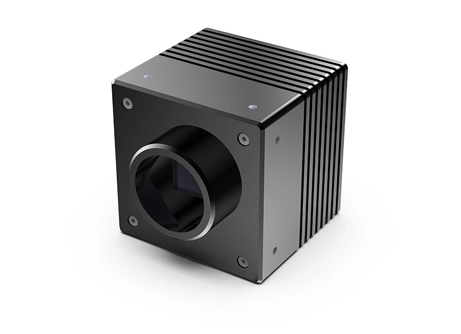
A USB3 camera is an industrial imaging device that transfers image data to a host computer through a USB3.0 or USB 3.x interface. In a SWIR imaging context, the camera combines short-wave infrared sensor capability—typically an InGaAs focal plane array sensitive in the 900–1700 nm range—with a high-speed USB interface that connects directly to a standard industrial PC without requiring a dedicated frame grabber.
A USB3.0 SWIR camera is the result of combining these two technologies: the material-penetrating, moisture-detecting, silicon-transparent imaging capability of SWIR with the simplified, cost-effective connectivity of USB3.0. The result is a camera platform that can be deployed in semiconductor inspection, photovoltaic quality control, food sorting, plastic packaging inspection, and industrial process monitoring without the hardware overhead of traditional Camera Link systems.
GHOPTO's USB3.0 SWIR camera is built around the following core specifications:
| Specification | Value |
|---|---|
| Sensor type | InGaAs focal plane array |
| Resolution | 640 × 512 pixels |
| Pixel size | 15 μm |
| Spectral response | 0.9–1.7 μm / 0.4–1.7 μm |
| Frame rate | 430 Hz |
| Shutter type | Global shutter |
| Data interface | USB3.0 |
| Cooling | TEC (thermoelectric cooling) |
| Lens mount | C-mount |
| Dimensions | 55 mm × 55 mm × 60 mm |
| Weight | Below 250 g |
| Certifications | CE, FCC, RoHS |
| Feature | What It Delivers for Buyers |
|---|---|
| USB3.0 interface | Direct PC connection, no frame grabber in most designs |
| 640 × 512 InGaAs sensor | VGA-class SWIR imaging for industrial inspection |
| 430 Hz frame rate | High-speed defect detection and process monitoring |
| Global shutter | No motion distortion in fast-moving inspection scenes |
| TEC cooling | Stable sensor noise performance across operating conditions |
| C-mount | Compatible with standard industrial SWIR lens configurations |
| Compact body | Easier integration into tight machine layouts |
| CE, FCC, RoHS | Supports international procurement and compliance documentation |
For procurement teams comparing SWIR camera platforms, the USB3.0 interface is not a compromise—it is a deliberate system simplification that reduces cost and complexity while maintaining the imaging performance required for most industrial SWIR workflows.
Understanding why USB3.0 works for high-frame-rate SWIR imaging requires a brief look at the bandwidth numbers. This is the technical foundation behind the shift away from Camera Link for many 640 × 512 applications.
Industrial cameras generate continuous image data streams. The raw bandwidth requirement depends on resolution, frame rate, and pixel bit depth. For a 640 × 512 SWIR camera operating at high frame rates, the approximate data load is:
| Pixel Format | Approximate Raw Data Rate at 430 fps |
|---|---|
| 8-bit mono | 640 × 512 × 430 × 8 ≈ 1.13 Gbps |
| 14-bit mono | 640 × 512 × 430 × 14 ≈ 1.97 Gbps |
| 16-bit container | 640 × 512 × 430 × 16 ≈ 2.25 Gbps |
USB3.0—also referred to as USB 3.2 Gen 1 under current USB-IF nomenclature—provides a 5 Gbps SuperSpeed transfer rate. This means the interface has meaningful headroom above the raw data requirement for 640 × 512 imaging at 430 Hz, even at 16-bit pixel depth, provided the host controller, cable, driver, and storage pipeline are properly configured.
For buyers researching the benefits of USB3.0 interface for infrared cameras, the answer covers both technical and operational dimensions:
1. Sufficient bandwidth for VGA-class high-frame-rate SWIR data. The 5 Gbps USB3.0 transfer rate comfortably covers 640 × 512 imaging at 430 Hz across common bit depth formats, making it a practical choice for most industrial SWIR inspection workflows.
2. No dedicated frame grabber required in most system designs. This is the single largest cost reduction compared with Camera Link. Eliminating the frame grabber removes a hardware component, a driver layer, a potential failure point, and a significant line item from the system BOM.
3. Lower total system cost. USB3.0 interface chips, cables, and connectors are lower cost than Camera Link equivalents. GHOPTO specifically notes this cost advantage as a driver of USB industrial camera adoption in industrial applications.
4. Simpler cabling and easier replacement. USB3.0 industrial cables are widely available, lower cost, and easier to replace in the field than specialized Camera Link cables. For multi-station deployments, this simplifies spare parts management significantly.
5. Faster integration with industrial PCs and workstations. Most modern industrial PCs include USB3.0 controllers as standard. No additional acquisition board needs to be specified, sourced, or installed.
6. More compact machine design. Removing the frame grabber from the host PC reduces the number of PCIe slots required and allows more compact control cabinet design.
7. Better scalability for multi-station inspection lines. Adding a second or third USB3.0 SWIR camera to a line requires only an additional USB3 port or hub—not an additional frame grabber per camera.
8. Wider software ecosystem. USB3 Vision-compliant cameras work with a broad range of industrial image acquisition and processing software platforms, reducing integration risk.
9. Easier field service. When a camera needs replacement in the field, a USB3.0 connection is straightforward for any trained technician. Camera Link replacement requires more interface-specific expertise.
10. Strong fit for both SWIR R&D and production inspection. The combination of high frame rate, SWIR sensitivity, and simple connectivity makes USB3.0 SWIR cameras practical for both laboratory development and production-line deployment.
A USB3 camera is not a standalone device. Stable, high-performance SWIR machine vision depends on every component in the imaging chain being correctly specified and matched. Buyers who focus only on the camera sensor and ignore the interface, cable, host PC, and software layer frequently encounter frame drops, acquisition instability, or integration delays that could have been avoided.
| Component | What to Evaluate | Why It Matters |
|---|---|---|
| SWIR sensor | Resolution, pixel size, spectral response range | Determines what the camera can detect |
| Data interface | USB3.0 bandwidth, controller quality | Determines data throughput and stability |
| Frame rate | Full-frame and windowed mode rates | Affects inspection throughput |
| Bit depth | 8-bit, 12-bit, 14-bit, 16-bit container | Impacts dynamic range and bandwidth load |
| Cooling method | TEC or uncooled | Affects noise floor and low-light performance |
| Lens mount | C-mount or custom | Determines SWIR lens compatibility |
| USB3 cable | Length, shielding, locking connector, flex rating | Affects signal integrity and reliability |
| Host PC | USB3 controller type, CPU, RAM, storage speed | Prevents dropped frames and bottlenecks |
| SDK and software | Driver quality, API, acquisition tools | Determines integration speed and flexibility |
| Certifications | CE, FCC, RoHS | Supports global procurement and compliance |
A complete USB3.0 SWIR machine vision setup typically includes:
SWIR camera with InGaAs sensor
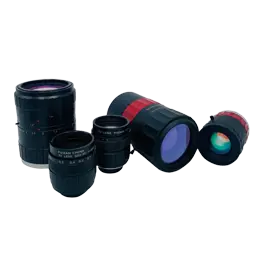
SWIR lens matched to sensor format and working distance
SWIR-compatible illumination source
Industrial-grade USB3.0 cable with locking connector
Host PC with dedicated USB3 controller
Camera SDK and acquisition software
Image processing and defect detection software
Trigger and I/O integration for production line synchronization
Mechanical mounting and alignment hardware
Optional environmental enclosure or thermal management
Cable quality is frequently underestimated in USB3 machine vision deployments. Key factors to verify:
Cable length relative to USB3 signal integrity limits
Industrial shielding quality for EMI-prone factory environments
Locking connector type to prevent accidental disconnection
Flex resistance rating for moving or articulated machine axes
Compatibility with the specific camera connector and host controller
Routing path inside the machine to avoid sharp bends or pinch points
Replacement availability for field service
The host PC is the downstream bottleneck in any USB3 camera system. Buyers should confirm:
A dedicated USB3 controller is available for the camera (not shared with other high-bandwidth peripherals)
The CPU and RAM can sustain the required processing load at full frame rate
Storage write speed is sufficient if continuous recording is required
The operating system and driver stack are validated for the camera SDK
| Factor | USB3.0 SWIR Camera | Camera Link SWIR Camera |
|---|---|---|
| Frame grabber required | No, in most 640 × 512 designs | Yes |
| Hardware cost | Lower—no frame grabber BOM item | Higher—frame grabber adds cost |
| Cabling | Standard industrial USB3 cable | Specialized Camera Link cable |
| Integration complexity | Lower—direct PC connection | Higher—frame grabber driver and configuration |
| System footprint | Compact—no acquisition board | Larger—PCIe slot required |
| Maintenance | Easier—standard interface | More specialized expertise required |
| Bandwidth | 5 Gbps—sufficient for most 640 × 512 workflows | High and deterministic |
| Best use case | SWIR R&D, machine vision, cost-sensitive automation | Ultra-demanding deterministic or legacy systems |
A USB3 camera with SWIR capability serves a wide range of industrial and research environments:
Semiconductor inspection: Silicon wafer crack and impurity detection using SWIR transparency of silicon
Photovoltaic manufacturing: Microcrack and process defect inspection in PV cell production
Food and agriculture inspection: Moisture variation, bruising, and contamination detection
Plastic and packaging inspection: Content verification and foreign object detection through SWIR-transparent plastics
Industrial process monitoring: High-speed thermal and material process observation
Security and surveillance: Low-light and SWIR-band imaging for challenging environments
Medical imaging research: SWIR-band tissue and material imaging in laboratory settings
Astronomy and scientific imaging: Extended spectral range imaging for research applications
OEM inspection equipment: Compact, cost-effective SWIR camera integration for equipment builders
GHOPTO positions its USB3.0 SWIR camera for surveillance, astronomy, machine vision, industrial process monitoring, and medical imaging, reflecting the broad applicability of the platform across both industrial and scientific buyer segments.
Eliminates frame grabber cost in most 640 × 512 system designs
Reduces total system BOM and installation complexity
Faster deployment across single and multi-station inspection lines
430 Hz frame rate supports high-speed defect detection workflows
Global shutter eliminates motion distortion in fast industrial scenes
TEC cooling stabilizes sensor performance across operating conditions
Compact 55 × 55 × 60 mm body fits tight machine integration spaces
CE, FCC, and RoHS certification supports international project procurement
C-mount compatibility with standard industrial SWIR lens configurations
Strong fit for buyers transitioning from Camera Link to modern USB3 platforms
Before finalizing a USB3.0 SWIR camera selection, buyers should clarify:
Is 640 × 512 resolution sufficient for the inspection target and defect size?
What frame rate is required—full-frame 430 Hz or a windowed subset?
What pixel bit depth is needed for the dynamic range of the application?
Can the host PC sustain the required data rate on a dedicated USB3 controller?
What cable length is required, and is signal integrity validated at that length?
Is trigger synchronization with production line equipment required?
What SWIR wavelength range is needed—0.9–1.7 μm or extended range?
Is TEC cooling required, or is an uncooled design acceptable?
What SWIR lens and illumination will be paired with the camera?
Is Camera Link still required for legacy system integration at the same site?
What SDK and software platform will be used for image acquisition and processing?
Before contacting GHOPTO, prepare the following:
Application industry and inspection target
Required wavelength range
Resolution and frame rate requirement
Pixel bit depth requirement
Interface preference: USB3.0 or Camera Link
Host PC specification and USB3 controller availability
Cable length and connector locking requirement
Trigger and I/O synchronization requirement
Lens mount and SWIR lens specification
Illumination wavelength and source type
Cooling requirement
SDK and software compatibility requirement
Environmental conditions (temperature, dust, vibration)
Order quantity and sample testing plan
Documentation and certification requirements
Delivery schedule and integration support needs
Repeat order forecast
Consistent long-term performance requires attention to the full system, not just the camera:
Use certified industrial-grade USB3 cables with locking connectors
Avoid excessive cable bending, tension, or sharp routing angles
Keep USB connectors clean and fully seated at both ends
Use a dedicated USB3 controller and avoid sharing bandwidth with other high-speed peripherals
Monitor for frame drops during initial commissioning and resolve before production deployment
Keep camera firmware and SDK updated to the latest validated version
Protect the sensor window and lens from dust and contamination
Maintain stable operating temperature within the camera's specified range
Recheck focus and alignment after any mechanical adjustment or lens change
Validate full acquisition stability before signing off on production deployment
Keep spare cables, mounting hardware, and lens accessories available for field service
The transition from Camera Link to USB3.0 in industrial SWIR machine vision is not driven by marketing—it is driven by the practical economics of system integration. For the majority of 640 × 512 SWIR inspection applications, USB3.0 provides sufficient bandwidth, eliminates frame grabber cost, simplifies installation, and reduces long-term maintenance complexity without compromising the imaging performance that semiconductor, photovoltaic, food, and industrial inspection workflows demand.
A modern USB3 camera platform like GHOPTO's GH-SW640Pro-U3 / GHCG-SW640-U3 gives machine vision teams the InGaAs SWIR sensitivity, 430 Hz frame rate, global shutter, TEC cooling, and compact form factor they need—delivered through an interface that connects directly to any industrial PC without additional acquisition hardware.
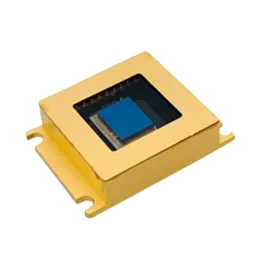
Contact GHOPTO to discuss your SWIR application, frame rate requirement, interface choice, lens and illumination configuration, host PC setup, SDK integration, sample testing plan, and bulk procurement requirements. GHOPTO provides SWIR cameras, SWIR sensors, SWIR lenses, and custom foundry services for machine vision, photovoltaic, semiconductor inspection, security, surveillance, and industrial imaging projects worldwide.
Q1: What is a USB3 camera?
A USB3 camera is an industrial imaging device that transfers image data to a host PC through a USB3.0 interface. In machine vision, it simplifies camera-to-PC integration by eliminating the need for a dedicated frame grabber in most system designs.
Q2: What are the benefits of USB3.0 interface for infrared cameras?
The main benefits are sufficient bandwidth for VGA-class high-frame-rate SWIR imaging, no frame grabber required in most designs, lower total system cost, simpler cabling, faster integration with standard industrial PCs, easier field maintenance, and better scalability for multi-station inspection lines.
Q3: Can USB3.0 handle 640 × 512 SWIR imaging at 430 Hz?
Yes. USB3.0 provides a 5 Gbps transfer rate, which offers meaningful headroom above the raw data requirement for 640 × 512 imaging at 430 Hz even at 16-bit pixel depth, provided the host controller, cable, and software pipeline are correctly configured.
Q4: Is USB3.0 always better than Camera Link for SWIR applications?
Not always. Camera Link remains suitable for certain legacy or highly deterministic acquisition systems. However, for most 640 × 512 SWIR machine vision projects, USB3.0 offers a better balance of cost, simplicity, and performance.
Q5: What should buyers check before selecting a USB3.0 SWIR camera?
Key checks include resolution, frame rate, bit depth, spectral response range, cooling method, cable length and locking, host PC USB3 controller availability, SDK compatibility, trigger support, lens mount, SWIR illumination, and supplier certification and integration support.
 English